

This report explores the feasibility of a paid parking program for tourist locations in the Shoalhaven region. Paid parking offers a potential revenue stream to offset the financial burden of tourism on the Council and ratepayers, while resident and business needs are prioritized through exemptions.
Background
Shoalhaven Council faces budgetary challenges and seeks additional income sources. Tourism is a key contributor to the local economy, but also strains Council resources used for building, operating, and maintaining infrastructure.
Implementing paid parking at popular tourist destinations with exemptions for residents, business owners, and workers could help address this problem.
Supporting Evidence
The Blue Mountains Council’s Parking Strategic Plan https://www.bmcc.nsw.gov.au/documents/parking-strategic-plan-2023 offers valuable insights:
- 71% of residents thought visitors should be charged to park, 21% thought they shouldn’t, and 8% were undecided.
- There are a number of smart parking technologies that can significantly reduce the costs of implementing and maintaining the system
- Where paid parking has been introduced it hasn’t had any significant effect on visitor numbers.
Revenue Potential
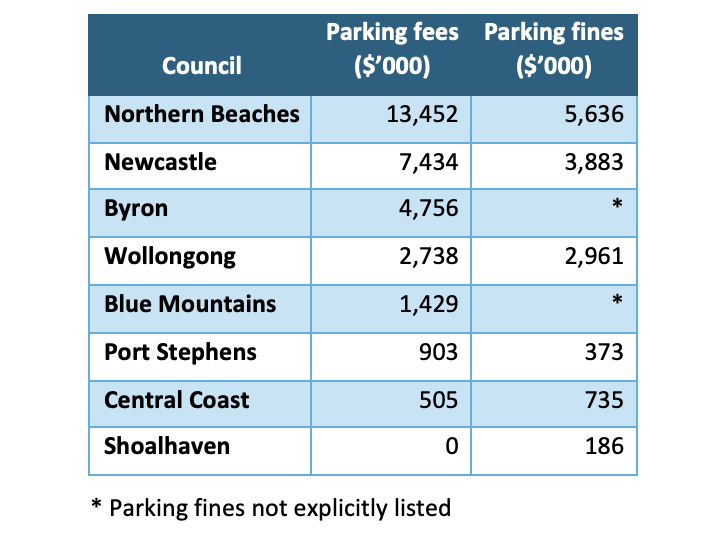
It is difficult to accurately assess the extra revenues that could be attained through paid parking as councils report parking income but not the cost of operating and maintaining the scheme. The following table gives an indication of parking revenue for a selection of councils that have implemented paid parking.
Potential Benefits
- Increased Revenue: Based on other councils’ experiences, a well-designed program could generate a significant financial contribution, potentially reaching $1-2 million annually.
- Reduced Ratepayer Burden: Additional revenue could alleviate some of the financial pressure on Shoalhaven ratepayers.
- Improved Infrastructure Management: Increased revenue could support ongoing maintenance and upgrades of tourist facilities.
Next Steps
A feasibility study is recommended to:
- Analyse local parking usage patterns and identify suitable locations.
- Evaluate smart parking technology options and their cost-effectiveness.
- Determine parking fee structure and resident/business permit options.
- Estimate implementation and ongoing operational costs.
- Conduct community consultation to gauge public opinion.
 Shoalhaven Greens